
How to Find NDIS Clients as a Sole Trader
Learn how to find NDIS clients as a sole trader with proven strategies including referrals, networking, online marketing, and business growth tips for NDIS providers.


Starting an NDIS business as a sole trader offers flexibility and independence, but finding clients can be challenging. Unlike larger providers with established referral networks, sole traders often need to build their client base from scratch.
The good news is that with the right strategies, you can attract participants, build trust, and grow a sustainable NDIS business. This guide explores practical ways to find NDIS clients and expand your services.
What Does It Mean to Be an NDIS Sole Trader?
An NDIS sole trader is an individual who provides disability support services independently. Sole traders manage their own clients, finances, compliance requirements, and daily operations.
Common services include:
- Personal care
- Community participation
- Domestic assistance
- Transport support
- Support coordination
- Allied health services
While the sole trader model offers flexibility, building a steady client base is essential for long-term success.
Understand How NDIS Participants Find Providers
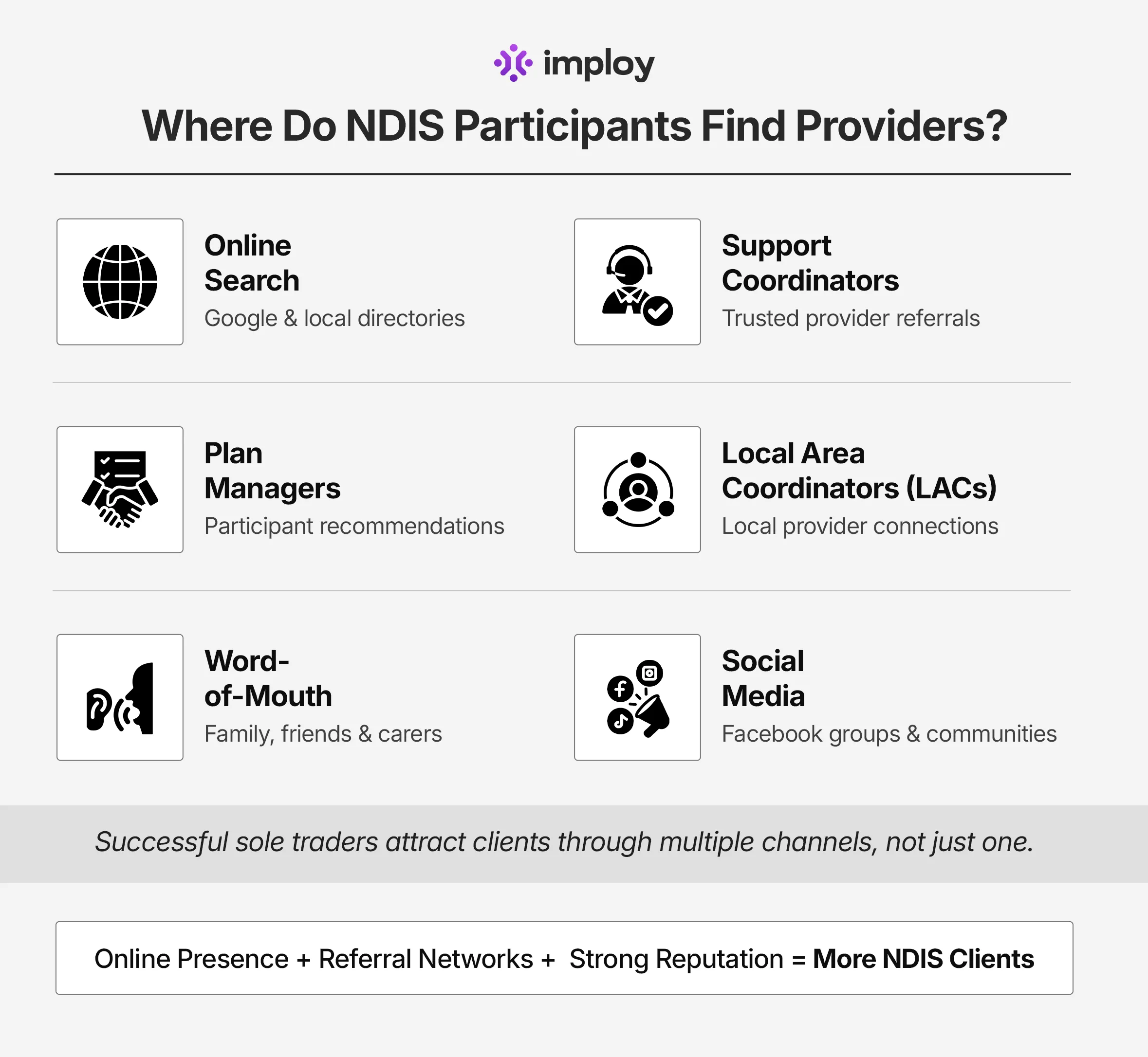
Before developing a marketing strategy, it's important to understand how participants typically search for services.
Most participants find providers through one or more of the following channels:
1. Support Coordinators
Support coordinators regularly connect participants with suitable providers and can become valuable referral partners.
2. Plan Managers
Plan managers often recommend providers to participants seeking services.
3. Local Area Coordinators (LACs)
LACs help participants navigate the NDIS and may direct them to local providers.
4. Online Searches
Many participants search online using terms such as:
- NDIS support worker near me
- Disability support services in Brisbane
- Community participation provider
Being visible online can increase enquiries.
5. Word-of-Mouth Referrals
Recommendations from participants, families, and professionals are often one of the most effective sources of new clients.
How to Find NDIS Clients as a Sole Trader?
1. Build Relationships with Support Coordinators
One of the most effective ways for sole traders to find NDIS clients is by building strong relationships with support coordinators.
Support coordinators are often responsible for helping participants find providers that match their goals, preferences, and support requirements. If they know and trust your services, they are more likely to refer participants to you.
i) Introduce Yourself Professionally
Create a simple provider profile that includes:
- Services offered
- Service areas
- Qualifications
- Experience
- Availability
- Contact details
Share it with local support coordinators and maintain regular contact.
ii) Attend Industry Networking Events
Networking can help you build referral relationships and increase visibility.
Consider attending:
- Disability expos
- Community events
- NDIS networking sessions
- Healthcare conferences
iii) Stay Visible
Keep referral partners informed about:
- Service availability
- New services
- Expanded locations
- Additional qualifications
Regular communication helps keep your business top of mind.
2. Create a Website That Generates Enquiries
A website helps participants learn about your services and contact you easily.
i) Include Essential Pages
Your website should include:
- Home Page
A brief overview of your services and who you support. - About Page
Information about your experience and approach. - Services Page
Clear descriptions of your services. - Contact Page
Simple ways for people to reach you.
ii) Optimise for Local Search
Use location-based keywords such as:
- NDIS support worker in Sydney
- Disability support provider in Melbourne
This can improve your visibility in local search results.
iii) Showcase Testimonials
Positive reviews help build trust and encourage potential participants to contact you.
3. Use Social Media to Build Awareness
Social media is a simple and cost-effective way to increase visibility and connect with potential clients.
i) Facebook
- Join local community groups
- Share updates and services
- Engage with participants and families
ii) LinkedIn
- Connect with support coordinators
- Network with plan managers
- Build professional relationships
iii) Instagram
- Share community activities
- Post service updates
- Create educational content
iv) Share Helpful Content
Provide value through:
- NDIS tips
- Funding updates
- Disability awareness content
Consistent, helpful content can build trust and attract new clients.
4. Join NDIS and Disability Service Directories
Many participants search provider directories when looking for support.
Consider listing your business on:
- NDIS Provider Finder
- Local disability directories
- Community service directories
- Independent provider platforms
Keep your profile updated with accurate information, services, and contact details.
5. Encourage Word-of-Mouth Referrals
One of the best ways to find new NDIS clients is through referrals from happy participants and their families. People are more likely to trust recommendations from someone they know than any advertisement.
i) Deliver Excellent Service
Participants are more likely to recommend providers who are:
- Reliable
- Professional
- Responsive
- Person-centred
ii) Ask for Reviews
Satisfied participants and families may be willing to leave a review or testimonial that can help build trust with future clients.
6. Network Within Your Local Community
Building local relationships can open doors to new referrals and opportunities.
Consider connecting with:
- Occupational therapists
- Physiotherapists
- Speech pathologists
- Psychologists
- Community organisations
- Local support groups
The more people who know about your services, the more referral opportunities you may receive.
Common Mistakes Sole Traders Make When Looking for NDIS Clients
Many sole traders struggle to attract new participants because of a few common mistakes. Avoiding these pitfalls can help you build a stronger reputation and generate more referrals.
1. Relying on One Referral Source
Depending solely on support coordinators or Facebook groups can limit your opportunities. Building multiple referral channels creates a more consistent flow of enquiries.
2. Neglecting Online Visibility
Many participants and families search online when looking for providers. Without a website or professional online presence, you may miss potential clients.
3. Poor Follow-Up
Potential clients often contact several providers before making a decision. Responding quickly and professionally can help you stand out from the competition.
4. Ignoring Existing Clients
Your current participants can be one of your best sources of referrals. Providing excellent service encourages positive word-of-mouth recommendations.
5. Lacking Business Systems
Managing schedules, client records, and invoices manually can become overwhelming as your business grows. Using the right software can save time and improve efficiency.
How Imploy Helps NDIS Sole Traders Grow?
Running an NDIS business involves much more than delivering support. Sole traders often need to manage administration, scheduling, invoicing, and compliance on their own.
Imploy helps simplify these tasks so you can focus on supporting participants.
1. Client Management
Store participant information, service agreements, and documents securely in one place.
2. Rostering and Scheduling
Manage shifts, availability, and appointments with ease.
3. Timesheets and Invoicing
Reduce administrative workload with streamlined billing and timesheet management.
4. Compliance Support
Keep records organised and stay prepared for audits and reporting requirements.
5. Scale Your Business
By automating everyday tasks, Imploy helps sole traders spend less time on administration and more time growing their business.
6. Free Forever Plan for Small Teams
Getting started is easy with Imploy's Free Forever Plan, which supports up to 5 users. It's ideal for sole traders and small providers looking to manage their operations without upfront software costs.
Final Thoughts
Finding NDIS clients as a sole trader takes time, consistency, and a proactive approach. Building relationships with support coordinators, maintaining a professional online presence, leveraging referrals, and engaging with your local community can all contribute to steady business growth.
The most successful sole traders focus on delivering high-quality support while continuously building their visibility and professional network.
As your business grows, having the right systems in place becomes increasingly important. Tools like Imploy can help streamline operations, reduce administration, and support sustainable growth, allowing you to focus on what matters most—helping participants achieve their goals.
FAQs
1. Can an unregistered sole trader work with NDIS participants?
Yes. Unregistered providers can work with self-managed and many plan-managed participants, depending on the supports being delivered.
2. How do support coordinators help sole traders find clients?
Support coordinators help participants connect with providers that match their goals, needs, and preferences.
3. Do I need a website as an NDIS sole trader?
While not mandatory, a website can improve your credibility and help potential participants find your services online.
4. What is the fastest way to get NDIS clients?
Building relationships with support coordinators, joining provider directories, and leveraging referrals are often the quickest ways to generate enquiries.
5. How can Imploy help sole traders?
Imploy helps sole traders manage clients, schedules, timesheets, invoicing, and compliance from a single platform, reducing administrative workload and supporting business growth.