
15 NDIS Business Ideas for 2025
Start your NDIS business in 2025 with these 15 high-demand ideas. Learn requirements, cost-saving strategies, and how Imploy helps you launch and grow successfully.


The National Disability Insurance Scheme (NDIS) continues to create new pathways for passionate support workers, sole traders, and entrepreneurs who want to make a real difference. As participant numbers grow and service needs diversify, 2025 presents one of the strongest opportunities yet to start a sustainable, impactful NDIS business.
Whether you're an experienced support worker or someone looking to enter the disability sector, this guide explores 15 high-demand NDIS business ideas, plus practical strategies to minimise costs, maximise profit, and grow your service with help from Imploy.
Why Start an NDIS Business in 2025?
The NDIS has rapidly expanded over the past few years, with funding increases, evolving participant needs, and greater emphasis on personalised supports. This creates incredible opportunities for businesses offering high-quality, compliant services.
Key reasons to start now:
- Strong and stable demand - more participants require diverse supports, from personal care to technology-driven services.
- Flexibility in service delivery - many providers can operate unregistered, mobile, or home-based.
- High earning potential - hourly rates for NDIS supports remain attractive for sole traders and small providers.
- Growing niche markets - cultural supports, fitness programs, sensory activities, and tech-enabled services are becoming more popular.
If you’re passionate about helping people with disabilities live more independently, the NDIS is one of the most meaningful sectors to build a business in.
To help you get going, check out our detailed blog on The steps to start your own NDIS business. This resource walks you through setting up your business, navigating compliance, and building a solid foundation.
Core Requirements to Launch an NDIS Business
Before starting, you’ll need to consider the following:
1. Business Structure
Choose a structure that suits your goals:
- Sole trader
- Company
- Partnership
- Not-for-profit
If you are planning to operate as an Sole Trader, you can read in detail on How to get an ABN for Support Workers on our blog.
2. Mandatory Policies & Compliance
Depending on your service type, you may need policies such as:
- Incident management
- Complaints handling
- Risk management
- Privacy and confidentiality
- Code of conduct adherence
3. Registration
Some services (e.g., plan management, behaviour support) require NDIS registration, while many others can operate unregistered as long as they serve self-managed or plan-managed participants.
4. Insurance & Worker Screening
- Public liability insurance
- Professional indemnity
- NDIS worker screening clearance
- First-aid and CPR training for support roles
By understanding these core requirements, you’ll be well-prepared to launch a compliant, safe, and professional NDIS business. Taking the time to set up the right structure, policies, and safeguards not only ensures regulatory compliance but also builds trust with participants, their families, and the broader NDIS community - laying the foundation for a sustainable and successful business.
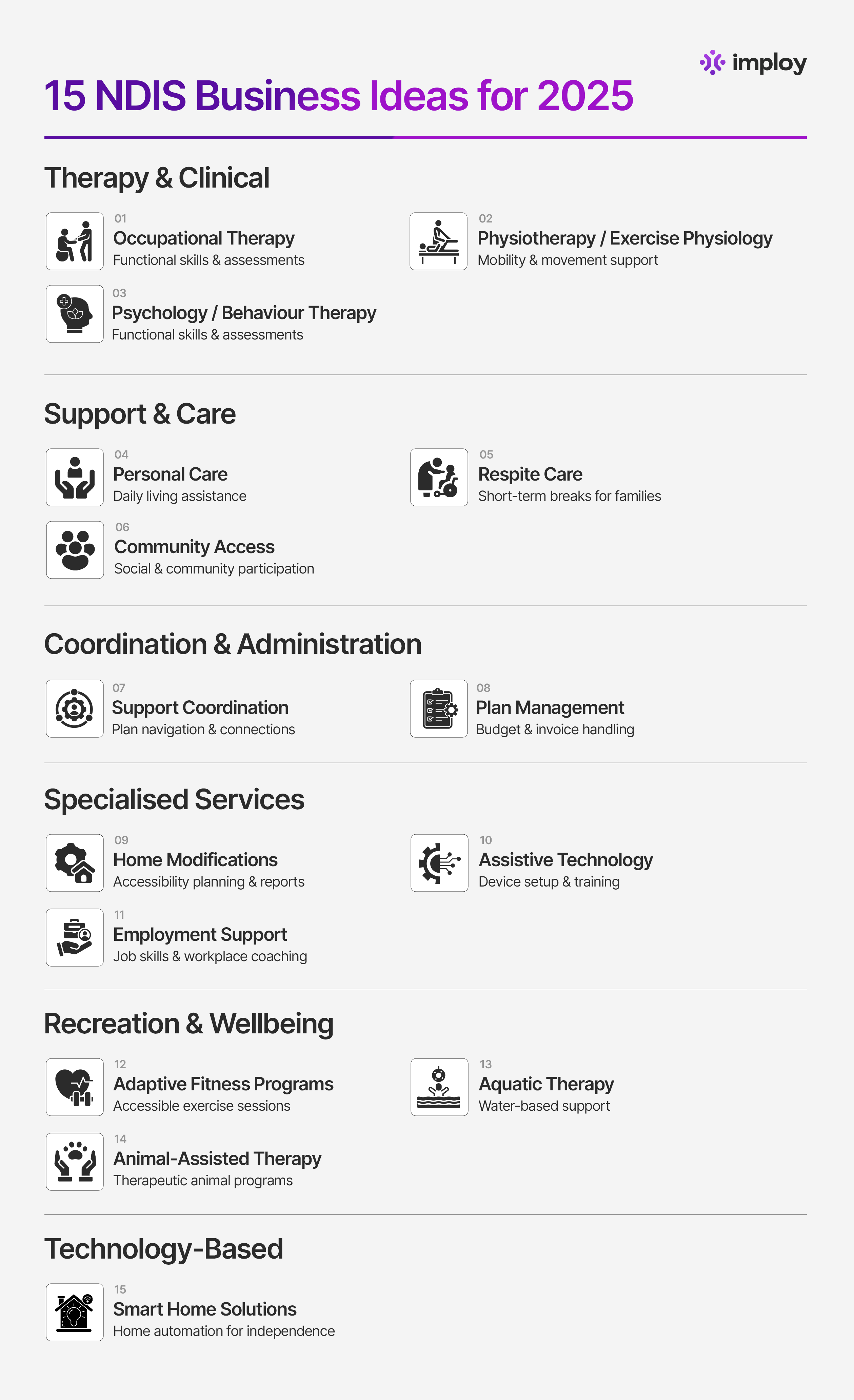
15 NDIS Business Ideas for 2025
Below are high-demand and future-focused business ideas suitable for new and existing providers:
Therapy & Clinical Services
Therapy-based services remain some of the most in-demand supports in the NDIS, helping participants improve independence, mobility, and emotional wellbeing. These services require professional qualifications but offer strong earning potential and long-term client relationships.
1. Occupational Therapy
Occupational therapists support participants with sensory needs, functional capacity, and daily living skills. This service remains one of the highest-demand areas across all age groups, making it a strong and stable business opportunity.
2. Physiotherapy & Exercise Physiology
These services help participants improve mobility, strength, physical function, and overall wellbeing. Mobile physio and EP sessions are especially popular as they increase accessibility for participants.
3. Psychology or Behavioural Therapy
Mental health services, behavioural intervention, and emotional regulation supports are essential for many NDIS participants. Providers in this space can offer both in-person and telehealth options to widen service reach.
Support & Care Services
Support and personal care services form the backbone of everyday NDIS assistance. These roles provide essential day-to-day support, making them highly stable, flexible, and ideal for new providers entering the sector.
4. Personal Care & In-Home Support
This includes assistance with daily activities such as showering, dressing, meal preparation, and household tasks. It’s one of the most consistently funded and in-demand NDIS support categories.
5. Respite Care Services
Respite gives families temporary relief while ensuring safe, quality care for participants. Providers can offer in-home or community-based respite tailored to individual needs.
6. Community Access & Social Inclusion
Services include outings, group activities, and skill-building programs that support independence and social participation. This is a flexible service type that allows providers to get creative with activities and programs.
Coordination & Administration
Administrative and capacity-building roles like support coordination and plan management help participants navigate their NDIS plans. These services require strong organisational skills and offer consistent, reliable income.
7. Support Coordination
Support coordinators help participants understand their plan, connect with providers, and build long-term capacity. This service requires strong communication and problem-solving skills and is highly valued by families.
8. Plan Management
Plan managers handle invoices, budgets, and NDIS financial processes for participants. It is an administrative-heavy role but offers steady revenue and long-term client relationships.
Specialised Services
These niche services focus on technical, professional or highly customised support needs. They are ideal for providers with specialised skills and are becoming increasingly important with evolving participant needs.
9. Home Modification Consultancy
These providers assess participant homes and advise on accessibility changes such as ramps, bathrooms, and mobility pathways. They also coordinate builders and prepare reports for NDIS funding approvals.
10. Assistive Technology Support
This includes recommending AT devices, training participants, and setting up communication or mobility tools. With technology becoming essential in daily living, AT services are rapidly growing.
11. Employment Support Services
Providers help participants develop job skills, prepare resumes, and settle into workplace environments. This service promotes independence and long-term financial wellbeing for participants.
Recreation & Wellbeing
Recreation, fitness, and wellbeing programs help participants build confidence, social skills, and physical health. These services are flexible, creative, and well-suited to providers who enjoy community engagement.
12. Disability-Friendly Fitness Programs
These include adapted personal training, gym sessions, or group fitness tailored to disability needs. Fitness programs support physical health and have strong demand among young and adult NDIS participants.
13. Aquatic Therapy or Swimming Programs
Water-based therapy helps with mobility, sensory regulation, and rehabilitation. It is especially beneficial for participants with autism, anxiety, or physical disabilities.
14. Animal-Assisted Therapy
Therapy animals can support emotional regulation, reduce anxiety, and enhance sensory engagement. This niche service is highly unique and can attract strong participant interest.
Product & Tech-Based Services
Technology-driven supports - including assistive devices and smart-home setups are fast-growing areas within the NDIS. These services help participants gain independence and are ideal for tech-savvy providers or businesses wanting to enter a future-focused niche.
15. Smart Home Accessibility Services
Providers install and configure smart-home technology like automated lighting, safety alarms, and voice-controlled devices. This area is rapidly expanding as participants seek greater independence through technology.
These 15 business ideas represent some of the most promising and scalable opportunities within the NDIS sector. Whether you’re starting from scratch or expanding your existing service range, focusing on high-quality delivery, compliance, and participant outcomes will set you apart in a competitive market.
With the right strategy and tools - such as Imploy’s resources for NDIS business setup and management, you can build a meaningful, profitable, and future-ready NDIS business in 2025.
How to Choose the Right NDIS Business Idea?
Picking the right idea depends on your experience, passion, and resources.
Consider:
- What skills or qualifications do you already have?
- Is there demand for a specific service in your location?
- Are there underserved niches (e.g., CALD communities, rural areas, sensory activities)?
- What is your startup budget?
- Do you want to operate registered or unregistered? (Learn in detail about The Differences between Registered and Unregistered Providers on our blog).
A good idea aligns with your strengths, market needs, and long-term vision.
How to Minimise Costs & Maximise Profit in Your NDIS Business?
Running an NDIS business efficiently is just as important as choosing the right service.
Cost-Minimisation Strategies
- Start small and lean - begin as a sole trader to reduce overheads.
- Use cloud-based tools instead of hiring admin staff.
- Operate mobile instead of renting office space (especially for support workers or therapists).
- Stay unregistered (where possible) to avoid audit fees.
- Outsource selectively - accounting, marketing, or policy writing only when needed.
- Automate administrative tasks to reduce human error and time spent on paperwork.
Profit-Maximisation Strategies
- Focus on high-demand supports like community access, therapy, and complex care.
- Upskill to offer more specialised services that command higher hourly rates.
- Optimise scheduling to minimise travel and maximise billable time.
- Build strong referral networks with support coordinators and plan managers.
- Introduce complementary services to increase client lifetime value.
How does Imploy Helps?
Imploy is designed to help NDIS sole traders, new providers, and small teams start and grow confidently - with less admin, more clarity, and higher profitability.
a. Simplified Onboarding & Business Setup
Imploy provides easy-to-follow guidance for starting your NDIS business, including resources for:
- Business planning
- Pricing
- Documentation
- Compliance
- Client onboarding
b. Reduce Administrative Costs
Imploy replaces manual spreadsheets and disorganised paperwork with tools for:
- Scheduling & rostering.
- Client notes & documentation.
- Time tracking.
- Task management.
- Client communication.
This dramatically cuts admin time and operating costs.
c. Boost Profitability through Smarter Operations
Imploy helps you:
- Reduce travel time with smarter scheduling.
- Maintain accurate documentation for audits.
- Automate reminders and client updates.
The result? Higher income with less effort.
d. Deliver Better Care with Less Stress
Imploy makes service delivery easier by simplifying everyday tasks, helping you stay compliant, organised, and focused on what matters most - supporting participants.
Future Trends & Opportunities for 2025
The NDIS sector is moving towards:
- Greater use of smart-home technology.
- More demand for fitness, lifestyle, and sensory programs.
- Cultural and language-specific support.
- More product-based businesses (adaptive clothing, sensory tools).
- Digital and remote support solutions.
Providers who innovate early will stand out.
Final Thoughts
The NDIS sector continues to open new doors for passionate support workers and entrepreneurs. Whether you want to provide therapy, start a support worker agency, deliver recreation programs, or venture into tech and accessibility - there’s a high-demand opportunity waiting for you.
With the right tools, support, and strategy, you can build a meaningful and profitable NDIS business in 2025.
Imploy is here to support you at every step - from setup to growth to delivering exceptional participant care.
FAQs
1. Do I need to register as an NDIS provider?
Not all services require registration. If you provide services like plan management, support coordination, or behaviour support, NDIS registration is mandatory. Other services can operate unregistered, serving self-managed or plan-managed participants.
2. What services are most profitable in 2025?
Services with strong demand and high hourly rates often include: therapy & allied health, support coordination, plan management, community access programs, and technology-enabled supports.
3. Can I run multiple services under one NDIS business?
Yes, provided you meet qualifications, registration, and compliance requirements for each service type. Bundling complementary services can also increase revenue and participant value.
4. How much does it cost to start an NDIS business?
Startup costs vary based on service type, location, and whether you register with NDIS. Costs may include: insurance, worker screening, business registration, equipment, marketing, and policies. Using tools like Imploy can help reduce admin costs.
5. How can Imploy help me grow my NDIS business?
- Streamlines administration, scheduling, and client management.
- Provides resources for compliance, training, and policies.
- Helps optimise billing and maximise billable hours.
- Offers guidance on marketing, service expansion, and client engagement.