
How to Find NDIS Clients as a Provider in 2026
Explore the best NDIS client acquisition strategies in 2026, including online visibility, referrals, and positioning to attract the right participants.

Finding NDIS clients in 2026 isn’t about posting more ads or hoping for random enquiries. The NDIS market is crowded, participants and families are overwhelmed by choices, and many providers struggle not because of poor care - but because their marketing, messaging, and referral systems aren’t aligned with who they serve best.
To grow consistently, you need a system that combines clarity of service, strong visibility online, and strategic referral pathways - so ideal participants can find you when and where they’re searching. In this blog, we will explain ethical ways to attract NDIS clients this year.
Why Is It Difficult to Find Clients as an NDIS Provider?
Despite the growing number of NDIS participants, many providers still struggle to consistently attract new clients. The challenge isn’t always a lack of demand - it’s often due to increasing competition, changing participant expectations, and gaps in how providers position and promote their services.
Here are some of the key reasons why finding clients has become more difficult in 2026:
1. Increased Competition
The NDIS market has grown rapidly, with thousands of providers now offering similar services. This makes it harder to stand out, especially if your services and messaging are too broad or generic.
2. Participants Have More Choice
Participants and their families are more informed than ever. They compare multiple providers, read reviews, and expect personalised, high-quality care - making the decision process more selective.
3. Lack of Clear Positioning
Many providers try to serve everyone, which weakens their messaging. Without a clearly defined niche or target audience, it becomes difficult for participants to understand why they should choose your service.
4. Weak Online Presence
In 2026, most participants search online first. Providers without a strong website, local SEO, or active social media presence often miss out on valuable enquiries.
5. Limited Referral Networks
Referrals from support coordinators and allied health professionals are a major source of clients. Providers who haven’t built strong relationships in the community may struggle to receive consistent referrals.
6. Poor Enquiry Management
Getting enquiries is one thing - converting them is another. Slow responses, unclear processes, or lack of follow-up can result in lost opportunities.
7. Administrative Burden
Many providers are overwhelmed with compliance, rostering, and reporting tasks. This leaves little time to focus on marketing, networking, or improving client acquisition strategies.
Finding clients isn’t just about visibility - it’s about having the right systems, clear positioning, and efficient processes in place. Providers who address these challenges strategically are far more likely to achieve consistent and sustainable growth.
Best ways to find NDIS Clients as a Provider in 2026
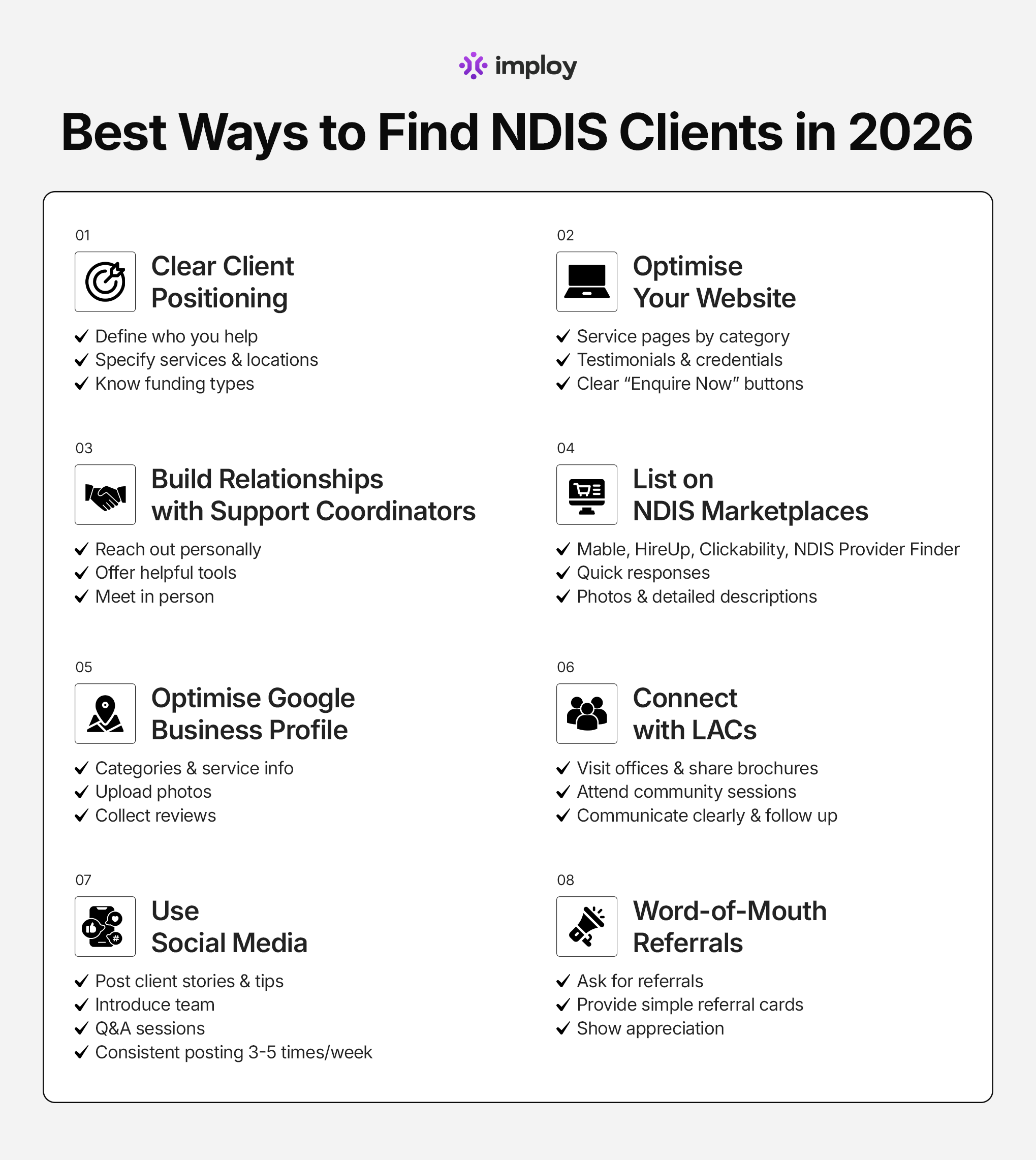
1. Start With Clear Client Positioning
Generic service descriptions don’t help participants - and they don’t help Google either. Most participants search for specific outcomes such as:
- NDIS autism support in Sydney
- SIL provider for intellectual disability Melbourne
- Psychosocial support near me
To be found and trusted:
- Define who you help (participant type, disability, goals)
- Specify what services you want more of
- Clarify where you serve (suburbs/cities)
- Know what funding types you support (self-managed, plan-managed, NDIA-managed)
When your messaging matches how people actually search, you get higher-quality enquiries - not random leads.
2. Make Your Website Work for You
Your website isn’t a brochure - it’s your client-finding engine. Many providers make these mistakes:
- Not targeting key services or locations
- No clear “who you help + how + where” message
- No obvious way to enquire or book
A high-performing NDIS website should include:
- Core service pages broken down by category
- Strong trust elements (testimonials, credentials)
- Clear calls to action (e.g. “Book a call”, “Enquire now”)
This structure helps both Google find you and participants trust you enough to reach out.
3. Build Strategic Relationships with Support Coordinators
Support coordinators are a top referral source because they assist participants in finding providers that align with their goals. Their trust carries weight.
How to Build These Relationships?
a. Reach Out Proactively
- Email support coordinators in your area with a personalised message.
- Introduce your services and your unique value proposition.
- Include a clear call‑to‑action (e.g., offer to meet or answer questions).
b. Offer Value - Not Just Promotions
Instead of selling your services, offer support coordinators insights or tools that help them do their job - like a downloadable service guide or quick checklist.
c. Meet in Person
Face‑to‑face interaction builds stronger, long‑lasting connections.
- Attend local networking events
- Host breakfast meetups
- Join industry panels
4. List Your Services on NDIS Marketplace Platforms
Marketplaces are now major discovery tools for participants.
Key Platforms to List On:
Tips for Optimising Your Listings
- Add a professional photo and clear logo
- Write a detailed, benefits‑focused description
- Upload service categories and geographic coverage
- Respond quickly to enquiries (within 24 hours)
Why Marketplace Listings Work?
Participants actively use these platforms to compare providers - making marketplace listings one of the most direct paths to enquiries.
5. Optimise Your Google Business Profile
A large number of participants search for providers using terms like “NDIS support provider near me” or “disability support services”.
Your Google Business Profile is the key to ranking in local search results.
How to Optimise It?
- Choose relevant categories
- Add full business details and service descriptions
- Upload professional photos
- Collect and respond to reviews
- Post updates
6. Connect with Local Area Coordinators (LACs)
LACs support participants with planning, connecting with services, and navigating the NDIS.
They act as selectors - guiding participants toward providers that meet quality, availability, and trust requirements.
How to Engage LACs?
- Visit local LAC offices in person
- Offer your brochures or service guides
- Attend community sessions hosted by LAC
- Invite them to provider‑open days
What LACs Look For?
- Clear communication
- Professional service delivery
- Timely follow‑up
Engagement doesn’t need to be salesy - focus on providing helpful information and building rapport.
7. Use Social Media Strategically to Build Awareness
Social media is one of the most cost‑effective ways to strengthen your brand and connect with participants and their support networks.
Platforms That Works:
What to Post?
- Client success stories (with consent)
- Educational videos on NDIS supports
- Team introductions
- Live Q&A sessions
Additional Tactics
- Join local NDIS groups on Facebook
- Share valuable insights, not just promotions
- Consider targeted ads if you have a marketing budget
Consistency matters. Plan to post at least 3–5 times per week.
8. Encourage Word‑of‑Mouth Referrals from Existing Clients
Participants who love your service are the best promoters. A referral from a trusted source significantly increases the chance of conversion.
How to Encourage It?
- Ask for referrals after positive feedback
- Provide referral cards or flyers
- Create a simple referral process that’s easy to explain
While the NDIS doesn’t allow financial incentives without careful compliance, small gestures (like personalised thank‑you cards) can make clients feel valued.
How Imploy Helps Providers Serve Clients?
Delivering high-quality NDIS support is more than showing up - it’s about efficient operations, clear communication, and consistent care. Imploy is built to help providers do exactly that, making it easier to focus on clients rather than administrative headaches.
After finding clients, its equally important for providers to serve them and retain them. Imploy helps providers retain the clients by offering the following features:
1. Centralised Client and Care Management
Manage client information, care plans, and progress notes all in one place. Providers can track each participant’s needs and preferences, ensuring every interaction is personalised and consistent.
2. Smart Scheduling and Rostering
Imploy simplifies shift planning, staff allocation, and scheduling. This ensures clients receive the right support at the right time, every time.
3. Mobile App for Real-Time Service Delivery
Support workers can access schedules, update progress notes, and communicate directly with the office from the field. This improves responsiveness and keeps clients informed.
4. Streamlined Invoicing and Budget Tracking
Automatically generate invoices and track participant budgets, reducing errors and ensuring timely, accurate billing. This allows providers to spend more time delivering care rather than chasing paperwork.
5. Built-In Compliance Tools
Imploy makes it easier to maintain accurate documentation and reports, helping providers meet NDIS standards with confidence.
6. Improves Client and Family Experience
By keeping care delivery organised and communication transparent, families feel informed, supported, and confident in the services being provided - encouraging trust and long-term engagement.
7. Supports Growth and Professionalism
With systems that streamline operations, providers can scale their services reliably. Efficient, well-managed care strengthens relationships with participants, support coordinators, and referral partners.
Final Thoughts
Serving clients effectively in 2026 requires both visibility and operational excellence. Attracting participants is just the first step - delivering consistent, professional, and personalised care is what builds trust, satisfaction, and referrals.
Platforms like Imploy help providers:
- Stay organised
- Reduce administrative burden
- Deliver high-quality support
- Enhance client and family satisfaction
By combining smart systems with intentional client-focused strategies, providers can ensure participants get the best care possible - while growing a sustainable and trustworthy NDIS business.
FAQs
1. Do I need a website to attract NDIS participants?
Yes. A well-structured website increases your visibility, builds trust, and makes it easy for participants and families to contact you. It also improves your search engine ranking.
2. Which NDIS marketplaces should I list my services on?
Popular platforms include Mable, HireUp, Clickability, and NDIS Provider Finder. These platforms connect providers directly with participants searching for services.
3. How can I get referrals from support coordinators?
- Reach out personally with a clear message
- Offer helpful tools or resources, not just promotions
- Attend networking events and industry meetups to build trust
4. Is social media effective for NDIS providers?
Yes. Platforms like Facebook, LinkedIn, and Instagram help you share success stories, educational content, and updates - building your reputation and attracting participants.
5. How important is Google Business Profile for NDIS providers?
Very important. Optimising your profile with services, locations, photos, and reviews helps participants find your business and enhances credibility.
6. What common mistakes should I avoid?
- Responding slowly to enquiries
- Not following up with referrals or leads
- Trying to serve everyone instead of a clear niche
- Ignoring social proof and testimonials